
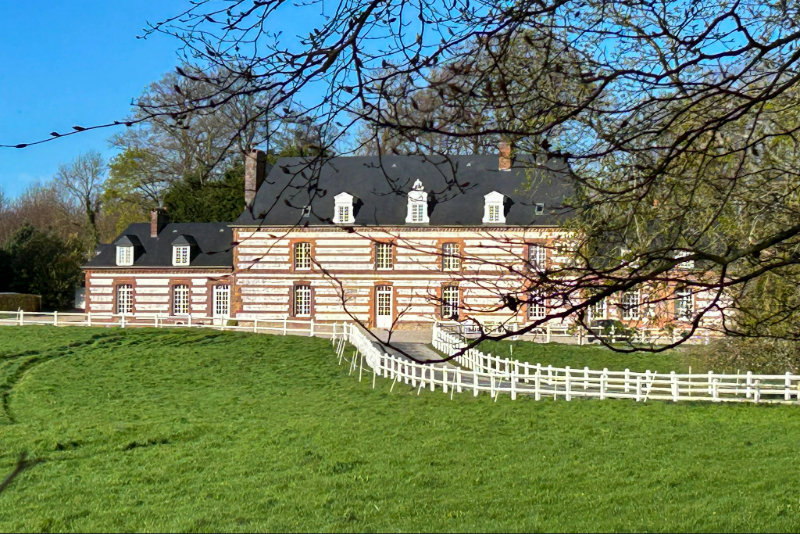
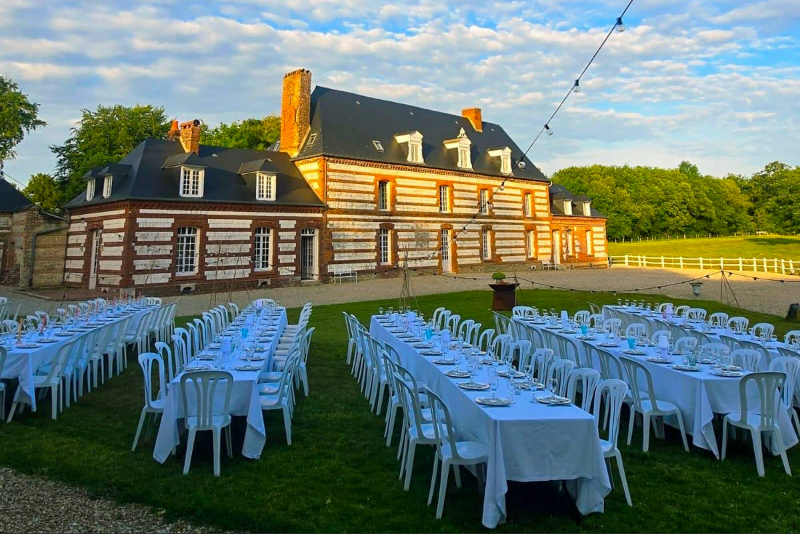
Just 2.5 hours from Paris, the Château de la Ferme de Mahomet stands out as a luxurious getaway in the heart of Normandy, just a stone’s throw from Dieppe and the Alabaster Coast. Located on the Domaine de la Ferme de Mahomet estate, this 20-hectare château welcomes you for family vacations, weekends with friends, or unforgettable events.
The château offers approximately 500 m² of living space spread over two floors, with 8 double bedrooms that can accommodate up to 15 people. Its separate annex, Le Cellier, rounds out the accommodations with 4 additional bedrooms for 7 people. The entire estate is reserved exclusively for you and your loved ones.
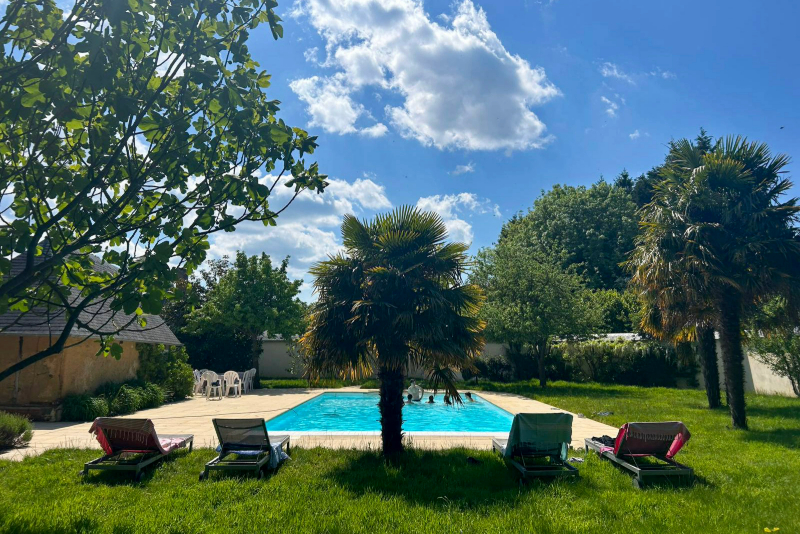
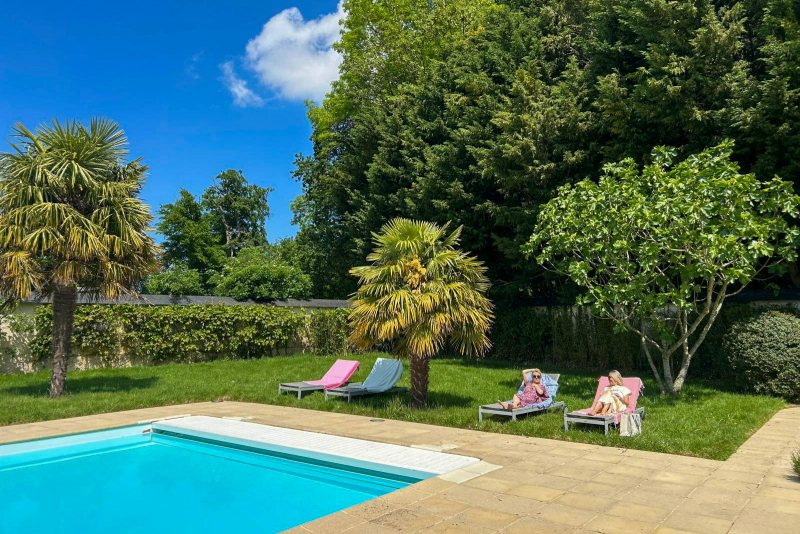
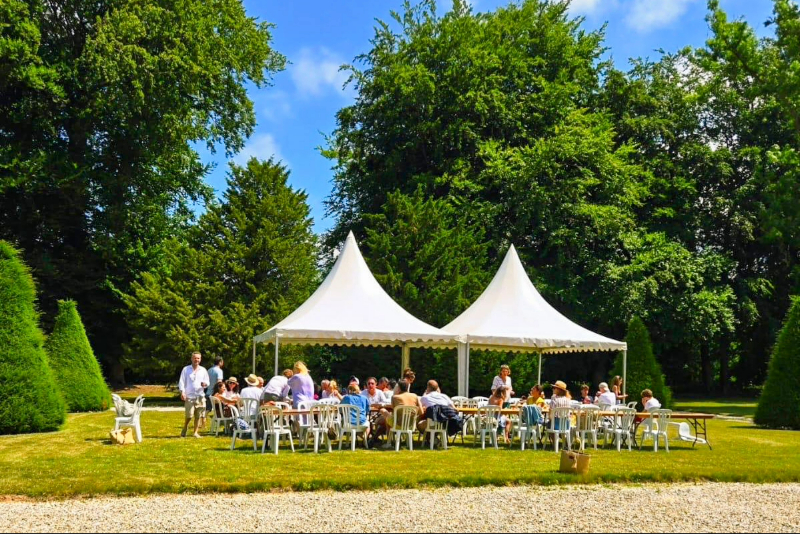
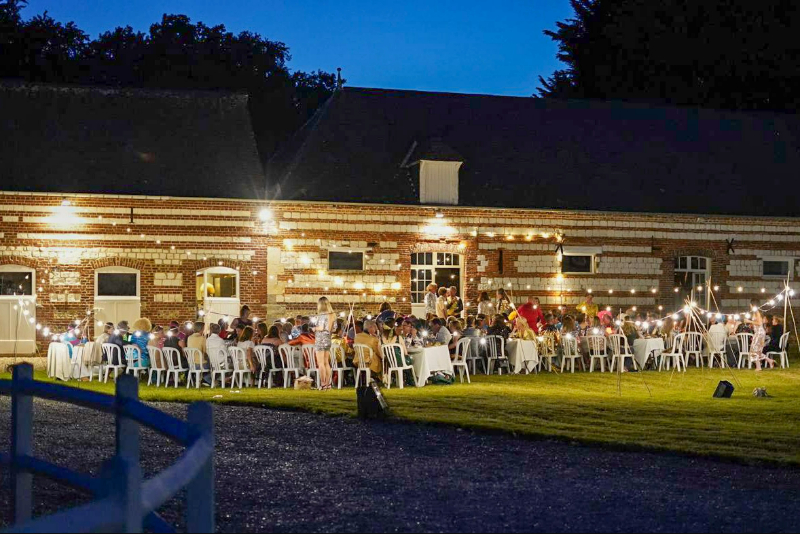
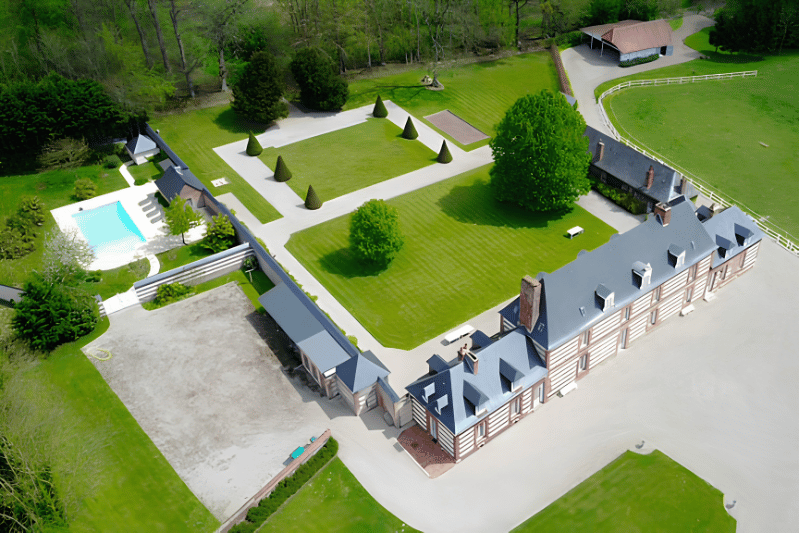
Outside, the enclosed grounds feature a secure, heated swimming pool, a tennis court, a barbecue, a ping-pong table, and about 30 parking spaces. For receptions, La Bergerie—just 50 meters from the château—can accommodate up to 80 guests in an authentic setting.
Explore the estate
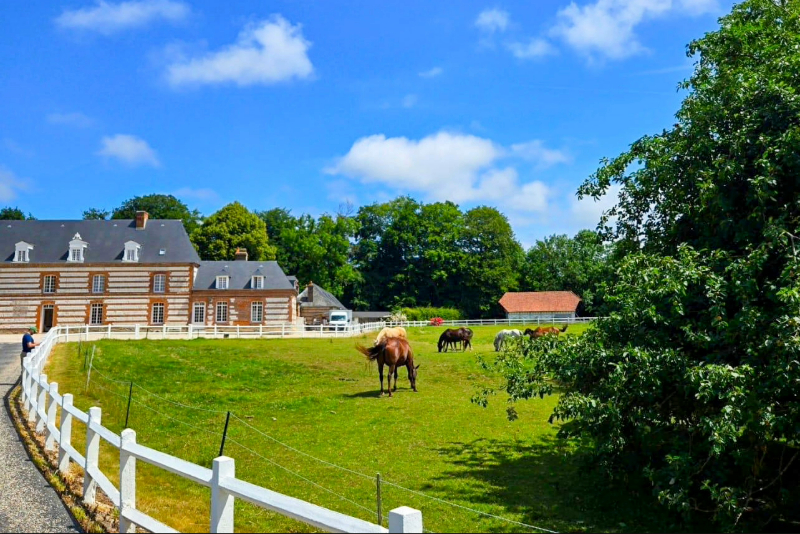
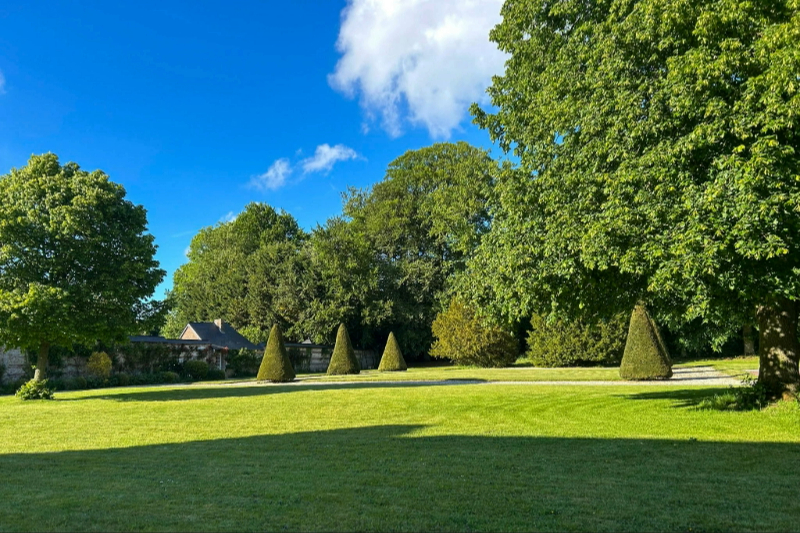
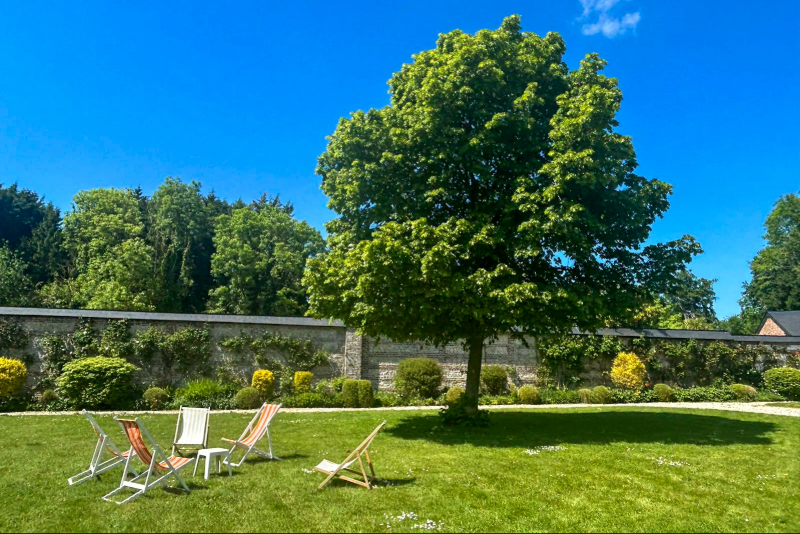
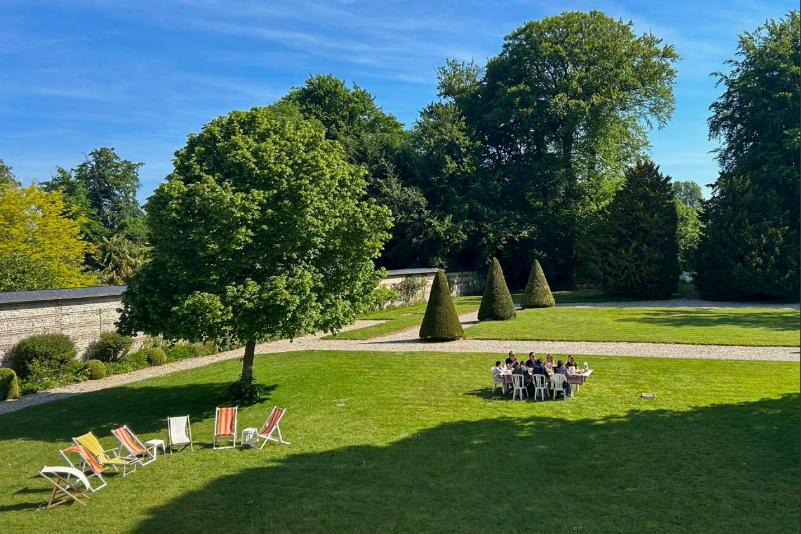
Nestled in Normandy, the Château de la Ferme de Mahomet estate spans 20 hectares within a fully enclosed grounds. Far from the hustle and bustle of big cities, this former hunting estate offers a haven of greenery and serenity just outside the coastal region of Normandy.
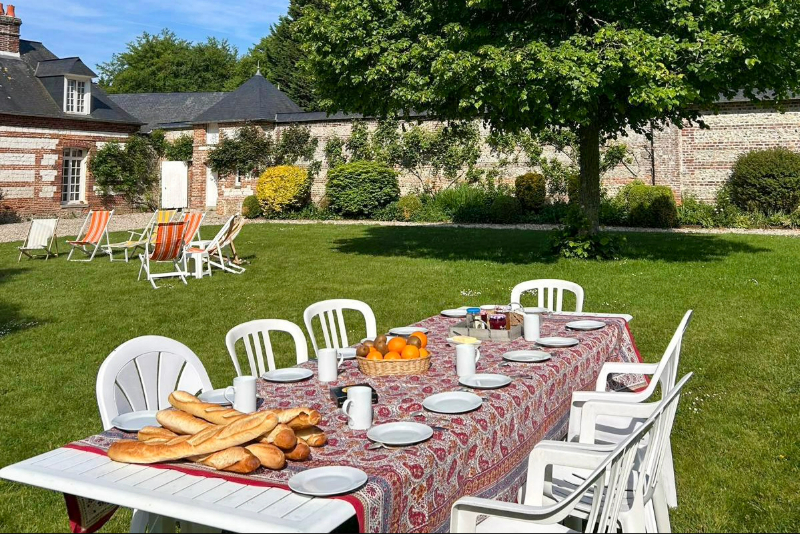
The Château de Mahomet’s fully enclosed 20-hectare park is a spacious, well-preserved area, perfect for stays with family or friends who want to enjoy the great outdoors in complete safety.
The 13 × 6 m heated pool, which is secure and accessible to all members of the group, is the centerpiece of the outdoor area during the warmer months. For sports and recreation enthusiasts, the property also features a tennis court, a ping-pong table, a barbecue, and outdoor furniture so you can fully enjoy the outdoors.
The estate has about 30 parking spaces within its enclosed grounds, providing ample space for all your vehicles.
Lounges and Reception Rooms
The ground floor of the Château de la Ferme de Mahomet features the spacious living areas essential for a successful group stay.
The dining room
Adjacent to the kitchen, it offers the ideal setting for group meals, with the warm, welcoming atmosphere typical of large Norman homes.
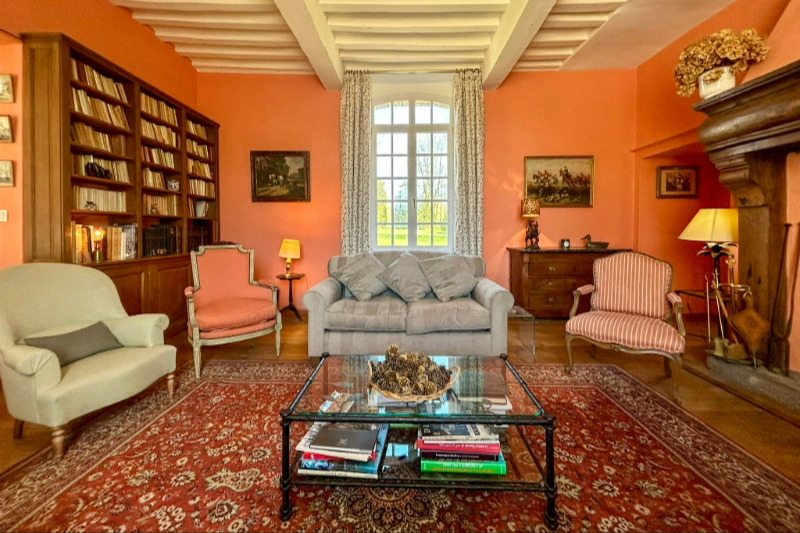
The living room
A cozy, welcoming space where it’s nice to gather after a day of exploring or activities—whether for a game night, a conversation by the fireplace, or simply a moment of shared tranquility.
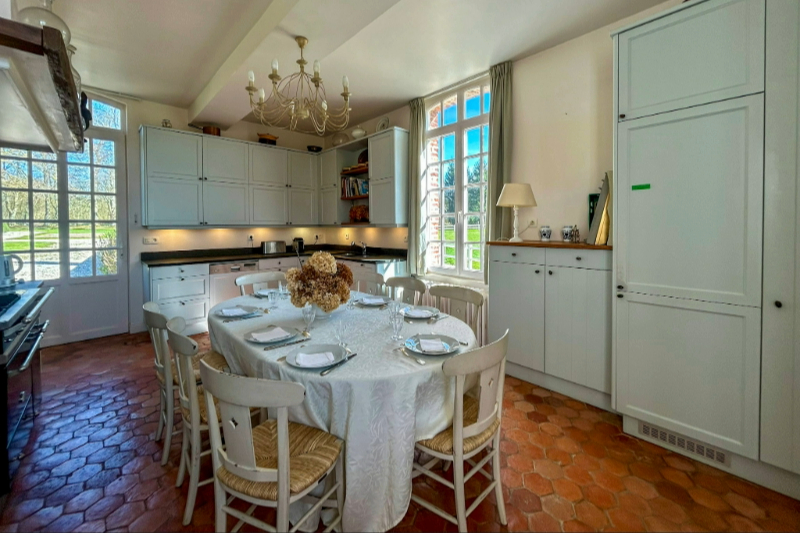
The Kitchen
Spacious and fully equipped for large gatherings, it features a refrigerator, a freezer, a dishwasher, an oven, a microwave, a gas stove, an ice maker, and a washing machine. Everything you need to cook together, with complete freedom.
The Sheepfold (available starting in May 2027)
Available starting in May 2027 for your events and located just 50 meters from the castle, La Bergerie is the venue dedicated to large gatherings. It can accommodate up to 80 people and has all the necessary facilities to host a wedding, birthday, family reunion, or any other family celebration.
Available amenities:
- 60 m² kitchen and adjoining room, ideal for your catering business
- 80 white chairs + about 20 gray outdoor chairs
- 1 large table ( seats 18) + 3 round tables
- Accessible space (please inquire about accessibility for people with disabilities)
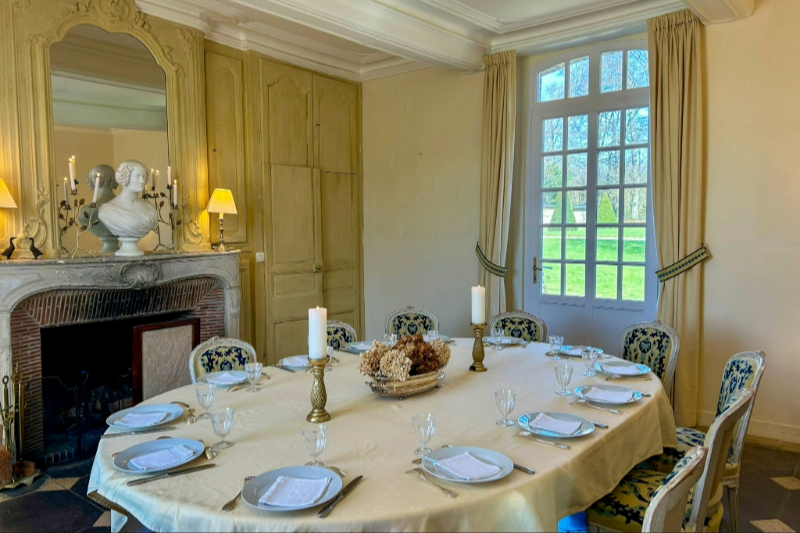
The dining room
Adjacent to the kitchen, with a warm, Normandy-style atmosphere.
The living room
A cozy place to relax.
The Kitchen
Spacious and fully equipped for large gatherings.
La Bergerie (starting in May 2027)
Large event space; 60 m² kitchen; chairs and tables provided.
The Rooms
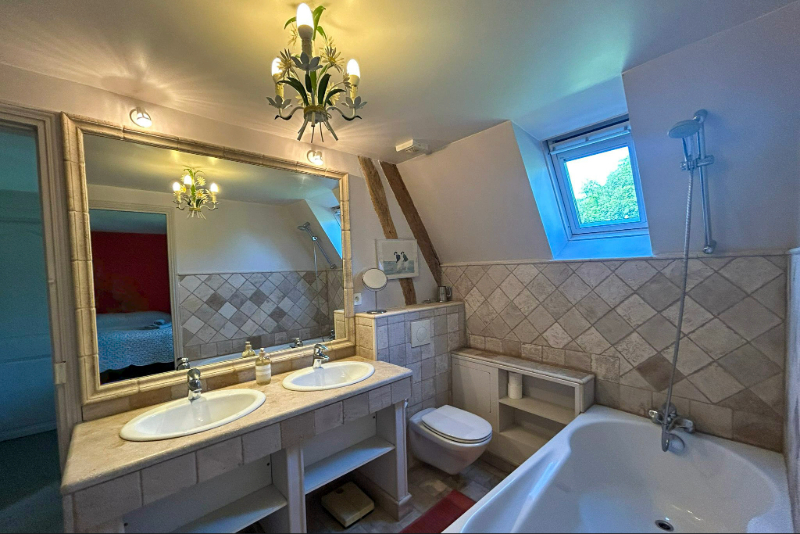
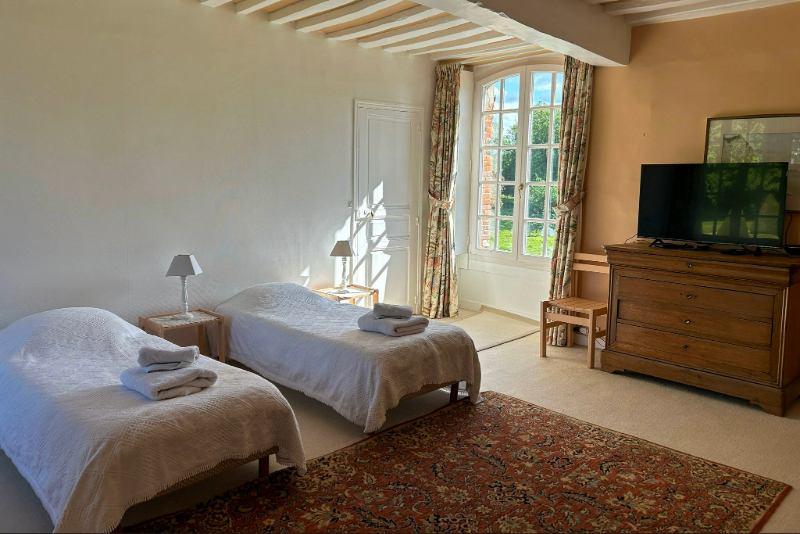
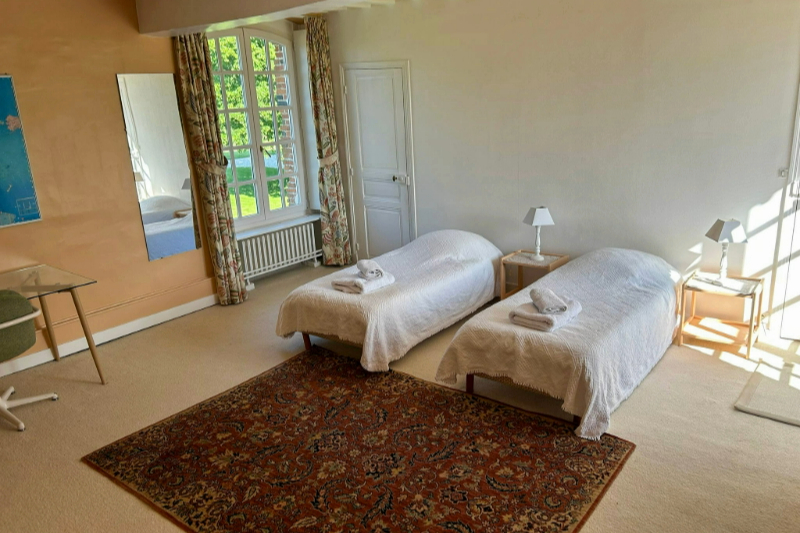
The castle can accommodate 15 guests in its 8 bedrooms spread across two floors, all of which feature private bathrooms and toilets. Each bedroom has its own unique character, with names that tell the story of the family’s history at this location.
All rooms are equipped with 160 × 200 cm beds, except for the Parents’ Room, which has a 200 × 200 cm super king-size bed.
The castle is equipped with an internet connection optical fiber to stay connected while enjoying the natural surroundings.
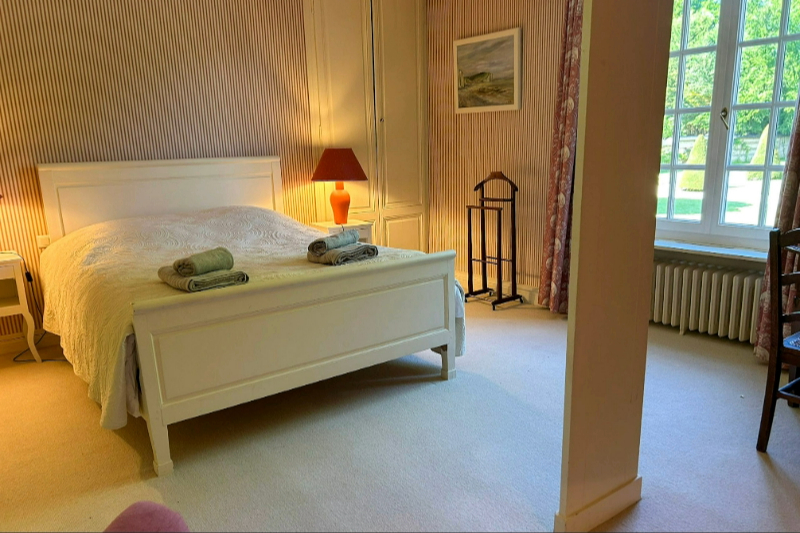
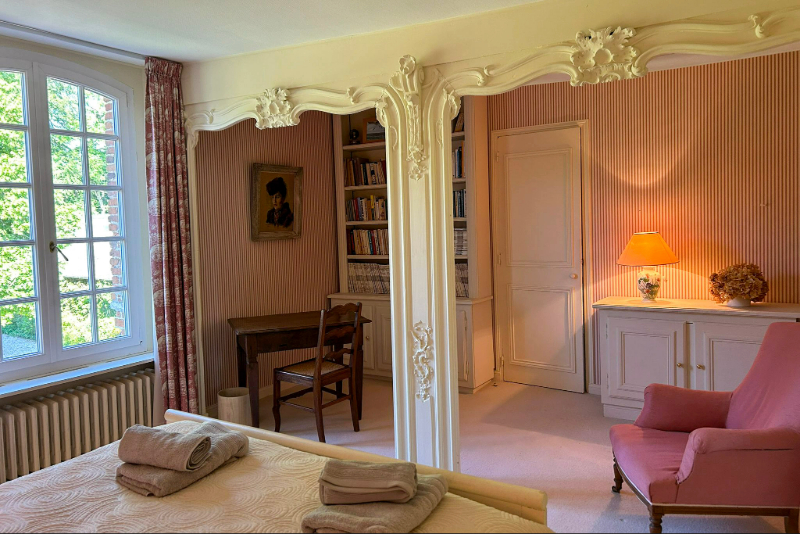
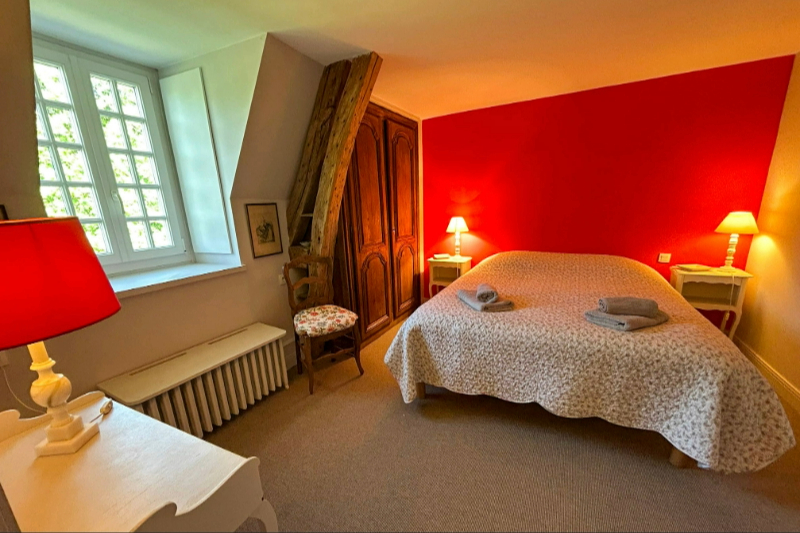
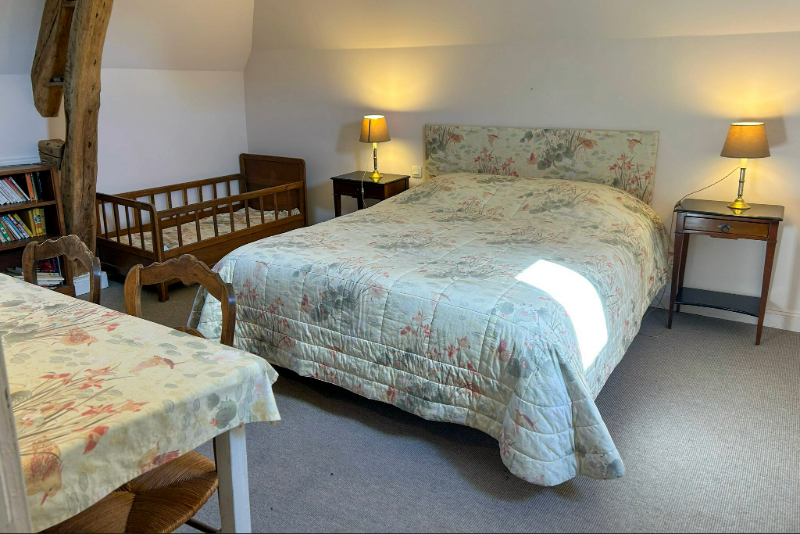
Red Room
1 double bed (160 cm)
Pink Room
1 double bed (160 cm)
Master Bedroom
1 double bed (200 cm)
Rémi's Room
1 double bed (160 cm)
Lumberjacks Room
1 double bed (160 cm)
Olivier's Room
1 double bed (160 cm)
Max Room
1 double bed (160 cm)
Isabelle's Room
1 double bed (160 cm)
Guest houses and outbuildings
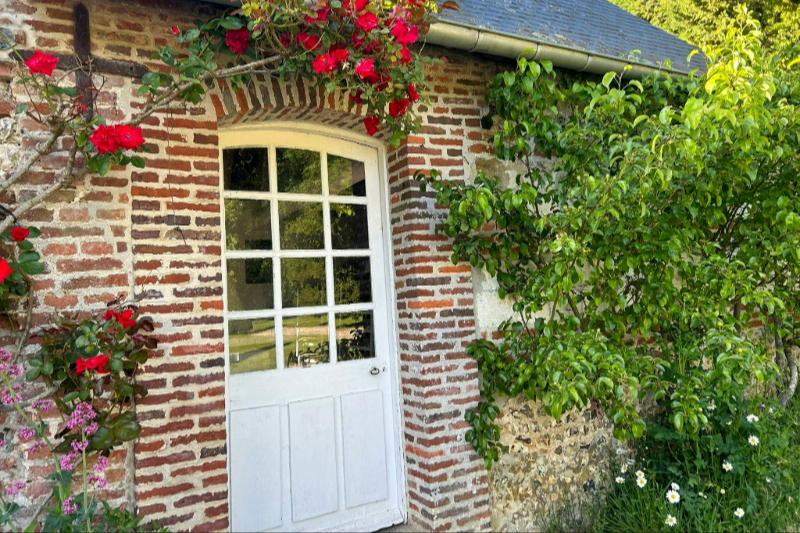
Just a short walk from the castle, Le Cellier is a detached house that can accommodate 7 people, with 4 bedrooms and two bathrooms. This separate building offers a welcome degree of privacy for part of the group, while remaining within the estate’s grounds and in close proximity to all the amenities.
Le Cellier is ideal for accommodating guests who want a little more independence, or to provide additional lodging during an event with about twenty people.
Availability
Check with us to see what's available, and let's discuss your project together.
Request these datesOur Rates
A fully privatized property
The Château de la Ferme de Mahomet is always rented out in its entirety to a single family or group, ensuring privacy, tranquility, and complete freedom.
During your stay, you’ll have access to the entire estate: the château with its reception rooms and guest rooms, and the Cellier, which can accommodate up to 23 people, as well as the grounds and the secure swimming pool.
What’s Included in Your Rental
All operating costs are included: heating, water, electricity, yard and home maintenance, as well as initial and final cleaning. Sheets and towels are provided, and the beds are made upon your arrival to ensure your comfort from the moment you arrive.
For your events, tables and chairs for the reception are provided to help you organize your dinners, parties, or weddings.
| Season | Stay | With reception | Without reception |
|---|---|---|---|
| Low season | |||
| 3 days / 2 nights | — | — | |
| Week | — | — | |
| Mid season | |||
| 3 days / 2 nights | — | — | |
| Week | — | — | |
| High season | |||
| 3 days / 2 nights | — | — | |
| Week | — | — | |
The History of the Castle
XVIIème CenturyThe name “Mahomet” intrigues, and its origin is a subject of debate. “Sun” in poetic language, a lord nostalgic for the Crusades… The most credible theory is actually a more humble one: “Mahomet” is said to be a corruption of “La ferme de Mathilde, ” with “Mahaut” being an old diminutive of that first name. The earliest record of the place can be found on a 1715 map of the Diocese of Rouen, unearthed by the family at a used-bookstore on the banks of the Seine; the estate is spelled MAHOMAIS on the map.
The main structure was built in 1610 using red brick, white limestone, and stone, and is topped with a slate roof typical of the Pays de Caux region. Looking at the facade, one notices that it is not perfectly straight: the structure simply conformed to the terrain rather than forcing it to conform. As for the narrowness of the rooms, this can be explained by a constraint of the time: long beams were reserved for the royal fleet. The builders therefore had to make do with what was left.
The manor house was subsequently expanded in two phases: the right wing (kitchen and Red Room) was the first addition, followed much later by the left wing, known as the “Petit Mahomet. “ Until the Revolution, the estate passed through the hands of Norman nobles and military officers, each leaving their mark on the woodwork and fireplaces.
In 1937, Mr. and Mrs. Wallaert, a large family from Lille, fell in love with Le Mahomet. The manor was in a deplorable state at the time: uninhabited for 33 years, with no water or gas and a dirt floor—but regardless, they had made up their minds.
For decades, they restored it piece by piece, salvaging woodwork and doors from demolition sites and building the oak bookcase in the small living room themselves. They hung paintings from the Lenglart family collection, including a large canvas in the dining room painted by Dominique Lenglart (1773–1814), a student of Louis Watteau.
Initially a weekend home, Le Mahomet became their primary residence upon retirement, and a routine took hold: the manor in the summer, Le Cellier in the winter. As producers of calvados—a Norman tradition that, unfortunately, would not be passed down—they also planted and sold Christmas trees to finance the estate’s upkeep and the caretakers who worked there year-round.
The estate subsequently saw a succession of agricultural activities, including cider apples, for which the orchards were uprooted to make way for new trees and create a hunting reserve. Buildings still bear the names of these past ways of life, such as the Bergerie and the Cellier.
In 1985, EDF planned to run a high-voltage power line through the estate. At the time, the owners joined forces with the “Vieilles Maisons Françaises de Seine-Maritime” association, whose president, the Count of Toulouse-Lautrec, personally visited the manor and signed a petition. An application for heritage listing was then filed, thereby postponing the route.
Passed down and renovated from generation to generation—with the next generation notably expanding commercial hunting operations while modernizing the accommodations—the Manoir de Mahomet is now available for rent. Its 17th-century roof trusses, its bedrooms named after family members, its paintings, and its period woodwork tell a true story: that of a home that has been cherished, protected, and proudly passed down for more than four centuries.
Things to Do in the Area
The estate enjoys a prime location for exploring coastal Normandy and the Pays de Caux, a region rich in spectacular scenery, history, and fine dining.
The Alabaster Coast and its cliffs
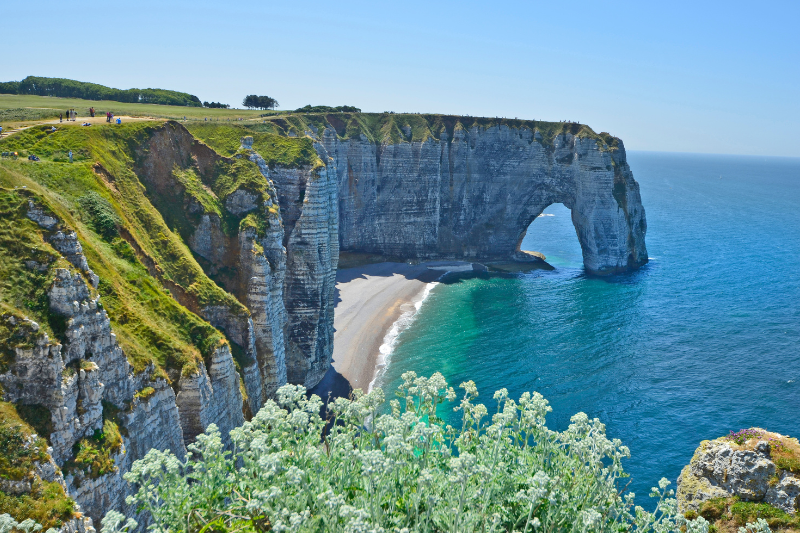
Less than 30 minutes from the château, the cliffs of Étretat are one of the most photographed natural sites in France. Their limestone arches plunging into the sea offer a striking spectacle, summer and winter alike. The beaches of Dieppe, Veules-les-Roses, and Saint-Valery-en-Caux are also within easy reach for a seaside getaway.
Dieppe, a City of Maritime Traditions
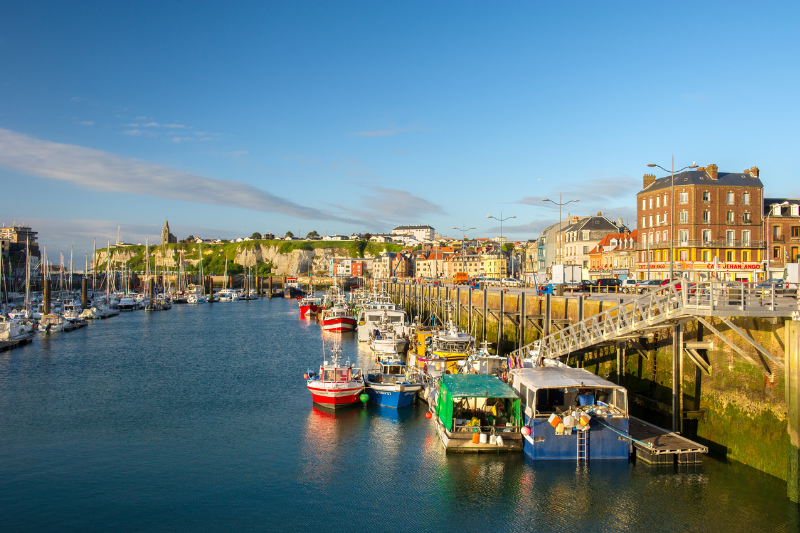
About 21 km from the castle, Dieppe is France’s oldest seaside resort. Its castle-museum, bustling fishing port, Saturday market, and seafood specialties are well worth a half-day visit. The city is also the departure point for cross-Channel ferries to England.
The Caux region and its manor houses
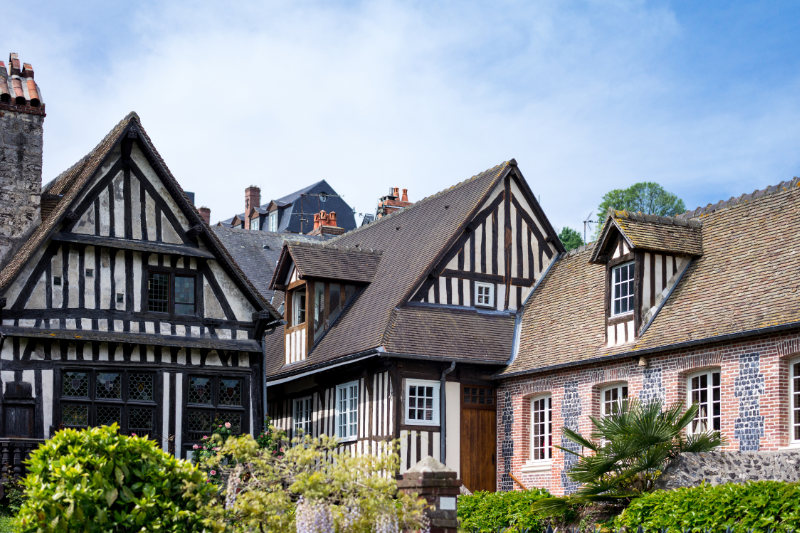
The region is dotted with Norman manor houses and brick-and-flint farmhouses, testaments to an exceptional rural architectural heritage. History buffs will also appreciate the many sites related to the 1944 D-Day landings, all within a two-hour drive.
Normandy’s Culinary Delights
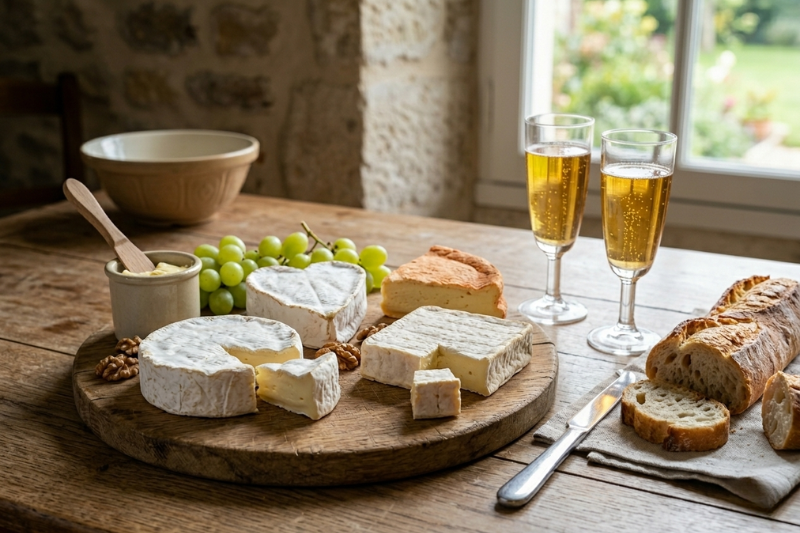
AOP cheeses (Neufchâtel, Livarot, Camembert), ciders and calvados, cream and butter: Normandy is a paradise for food lovers. Local markets and nearby farms offer the chance to buy directly from producers.
Hiking and Outdoor Activities
The Normandy coastline and the Bresle and Arques valleys offer beautiful hiking and biking trails through wooded countryside, cliffs, and forests.
Location & Practical Information
The Château de la Ferme de Mahomet is located in Petit-Caux (Seine-Maritime, Normandy).
By car:
- From Paris: Take the A13 to Rouen, then the A150, A151, and N27 to Dieppe, followed by the N925 and D26 to Intraville. About 2 to 2.5 hours (216 km).
- From Lille: Take the A1, then the A29 to Neufchâtel-en-Bray, then the D59 and D149. About 2 hours and 30 minutes (240 km).
By train:
- Paris → Dieppe: about 2 hours by direct train.
The Dieppe Airport is located 21 km from the castle.
Pets: Not allowed
Wi-Fi: Yes, fiber-optic connection
A video tour is available upon request so you can explore the castle before making your reservation.
Ground Floor
- Fully equipped kitchen: refrigerator, freezer, dishwasher, oven, microwave, gas stove, ice maker, washing machine
- Dining Room
- Living Room
First floor
- Red Room: 160 × 200 bed, bathroom (bathtub + toilet)
- Pink Room: 160 × 200 bed, bathroom (bathtub + toilet)
- Master Bedroom: 200 × 200 bed, bathroom (shower + bathtub + toilet)
- Rémi’s Room: 160 × 200 bed, bathroom (tub + toilet), flat-screen TV
Second floor
- “Bûcherons” Room: 160 × 200 bed, bathroom (tub + toilet)
- Olivier’s Room: 160 × 200 bed, bathroom (bathtub + toilet)
- Max Room: 160 × 200 bed, bathroom (tub + toilet), flat-screen TV
- Isabelle’s Room: 160 × 200 bed, shared bathroom and toilet (connected)
Exterior
- A 20-hectare, fully fenced park
- Heated, secure pool, 13 × 6 m
- Tennis court
- Ping-Pong Table
- Barbecue
- Outdoor Furniture Sets
- Parking (≈ 30 spaces)
Le Cellier (detached outbuilding)
- 4 bedrooms, maximum 7 guests
La Bergerie (reception, 50 m away)
available starting in May 2027
- Capacity: 80 people
- Catering kitchen + room: 60 m²
- Tables and chairs provided
Let’s talk about your project
Ask us for a quote — our prices come straight from the owners. Our team reviews your project with the owner and replies with care.
Your enquiry
You speak directly with our team: the occasion, the number of guests, your budget and what you have in mind.
Our selection
We put forward the châteaux that genuinely suit you — for every budget.
Your booking
Viewing, contract, secure payment: we see every step through with you.
Looking after you
One contact from start to finish, down to your suppliers — caterer, transport and the rest.