
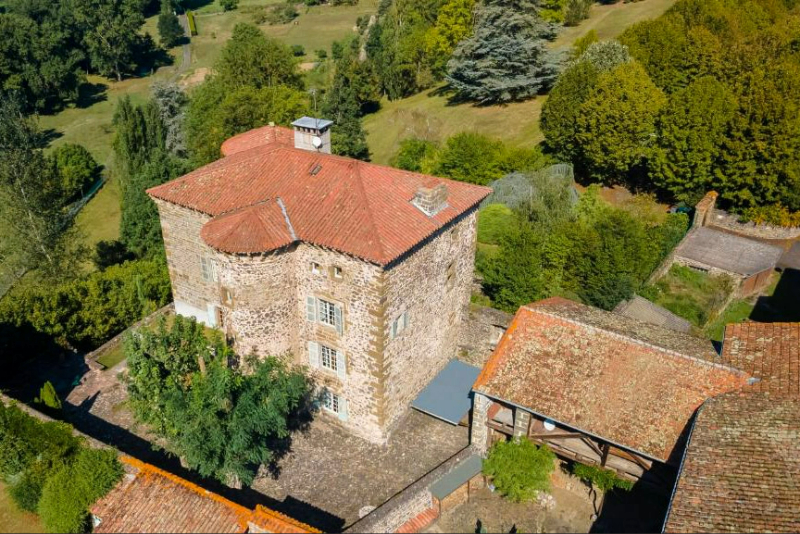
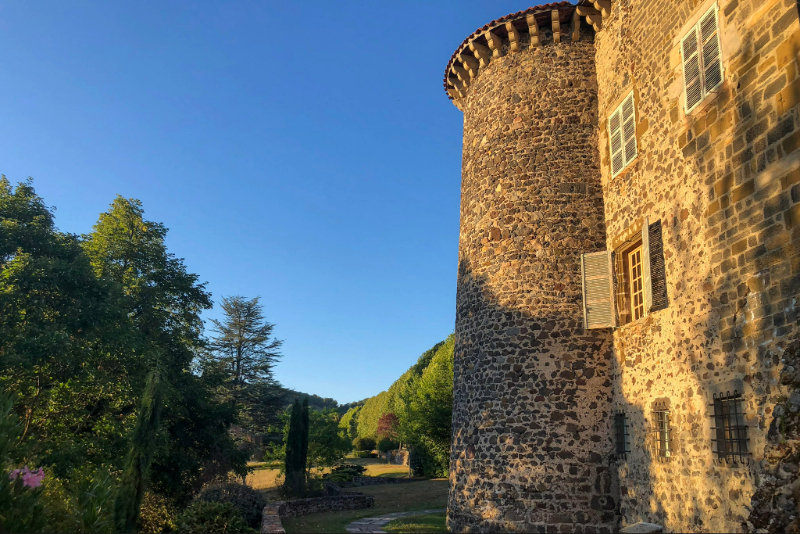
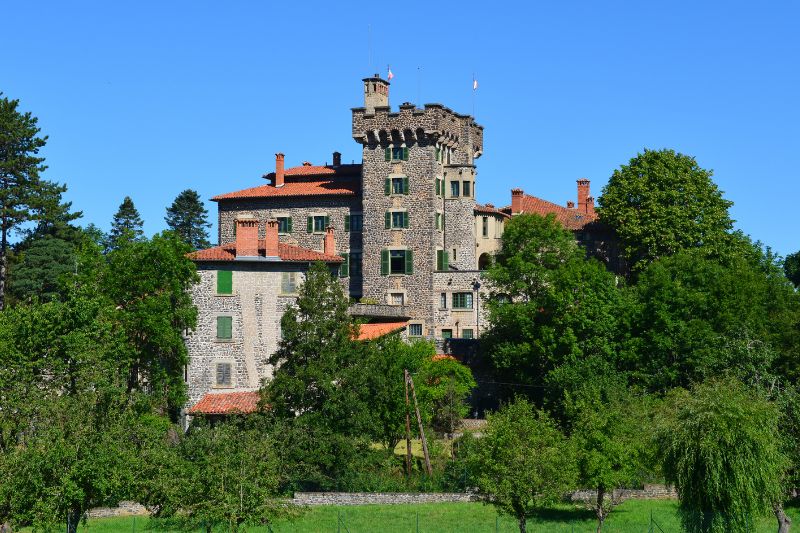
Halfway between Clermont-Ferrand and Le Puy-en-Velay, in the heart of the Allier Gorges, the Château de l’Allier rises like a 15th-century fortress facing the famous Blot Cliffs : a major prehistoric site and a designated biodiversity sanctuary. Located in the town of Cerzat, in the Haute-Loire department, this fortified manor overlooks the Haut-Allier Valley in a setting that is both wild and refined.
The castle offers 13 beds spread across 5 bedrooms, all with private bathrooms or a nearby water source, in a carefully restored interior where 16th-century woodwork, monumental fireplaces, and period furniture blend with all the comforts of modern life. Its A 2.7-hectare enclosed park, its heated pool with pool house, and the personalized service provided on site make Le Chambon a unique destination for a family vacation, a family reunion, or an intimate wedding.
Explore the estate
On the outskirts of the hamlet of Allier, two kilometers south of Cerzat, the castle stands overlooking the Haut-Allier Valley, facing the Blot Cliffs, a major prehistoric site that is now a sanctuary of biodiversity in the heart of the Allier Gorges.
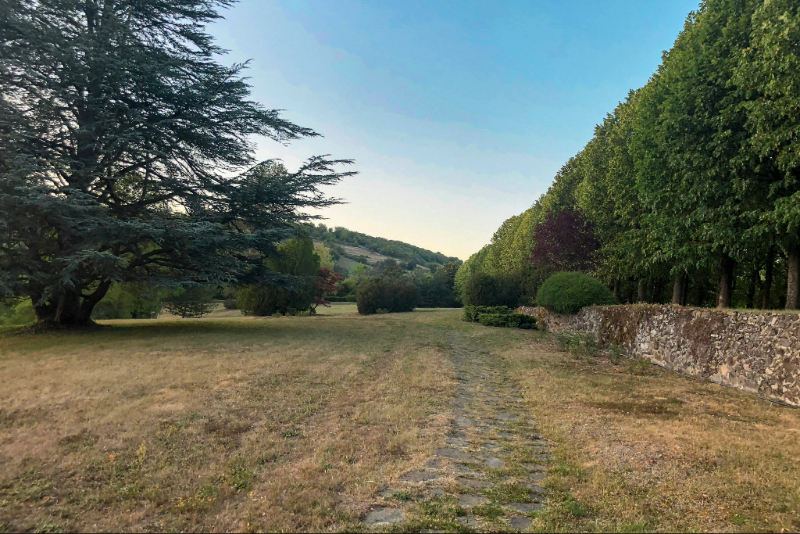
The estate covers a 2.7-hectare enclosed park, with an access driveway running through it and surrounded by a large wall. Carefully maintained and expanded, it offers sweeping views of the surrounding countryside and cliffs. Below the property, a a small, shaded ornamental pond, filled with water lilies and amphibians, adds a bucolic touch to the walk.
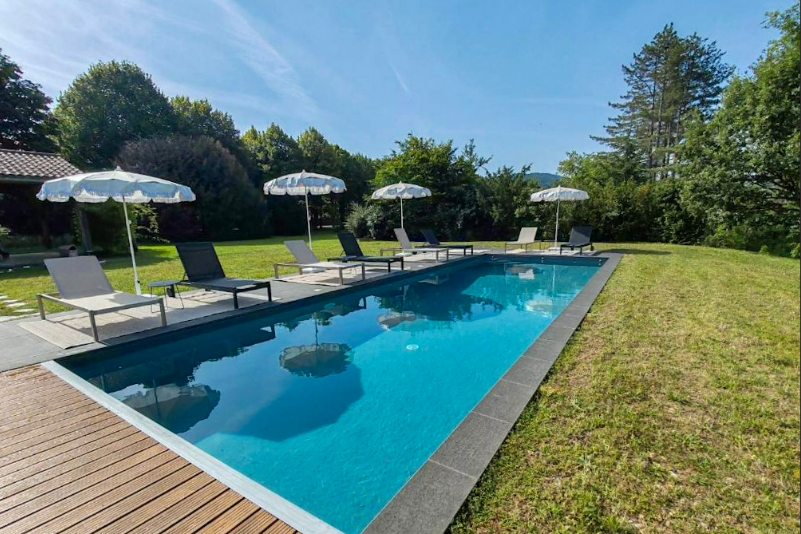
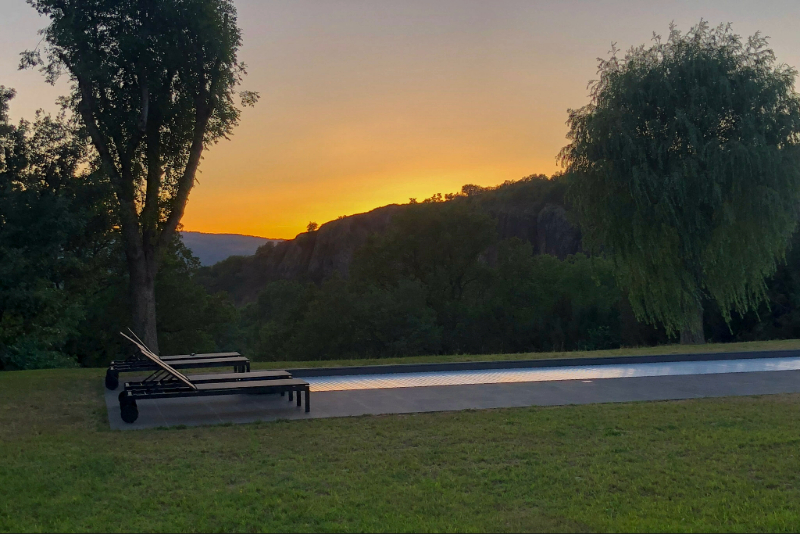
The heated outdoor pool (12 × 4 m), open from May through late September depending on weather conditions, is secured by an automatic submerged shutter. It is accompanied by a pool house. Table tennis, bowling, and pétanque round out the outdoor amenities, not to mention the patio furniture and the barbecue.
Lounges and Reception Rooms
The living spaces at the Château de l’Allier are spread across the ground floor and the first floor, creating an atmosphere where 15th-century authenticity and modern comfort complement each other.
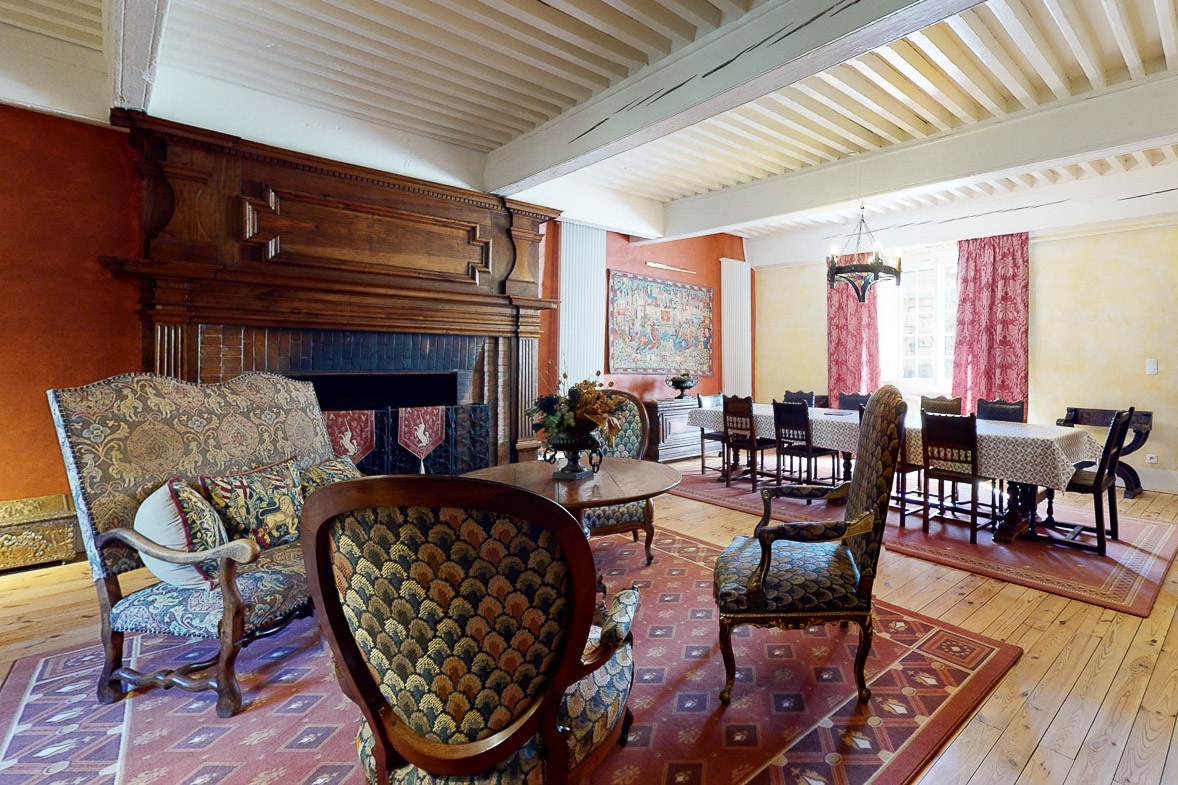
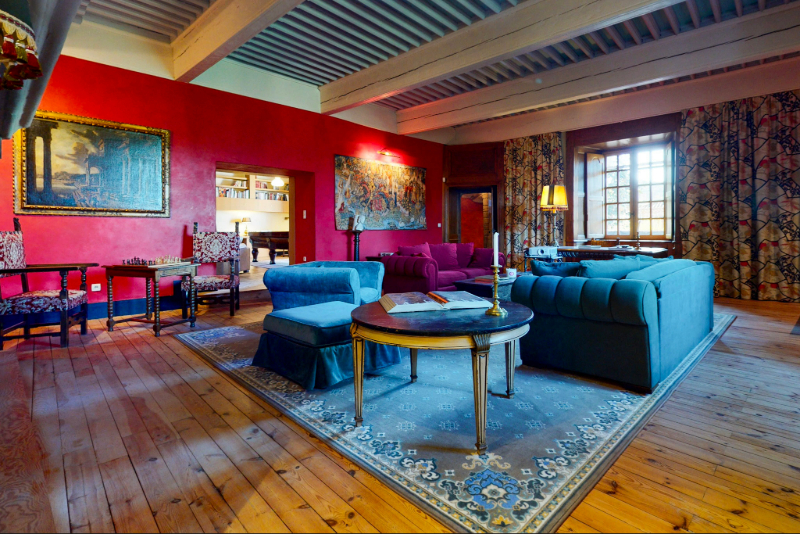
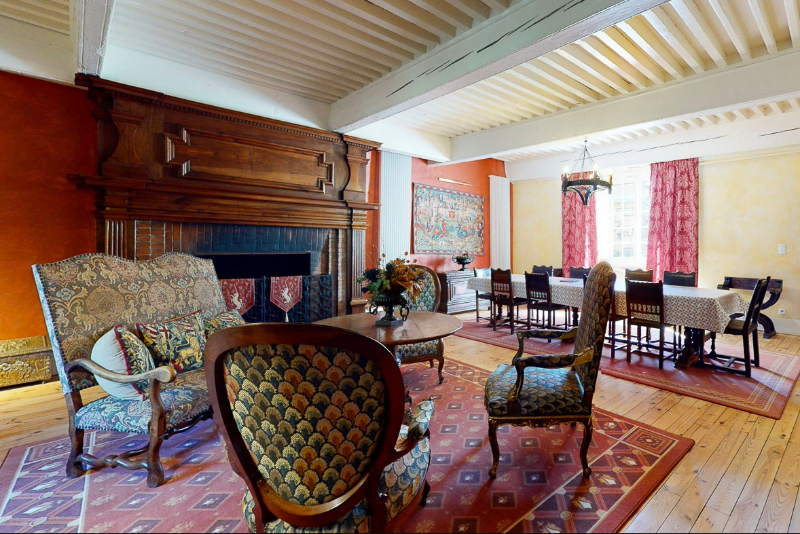
The living room and dining room
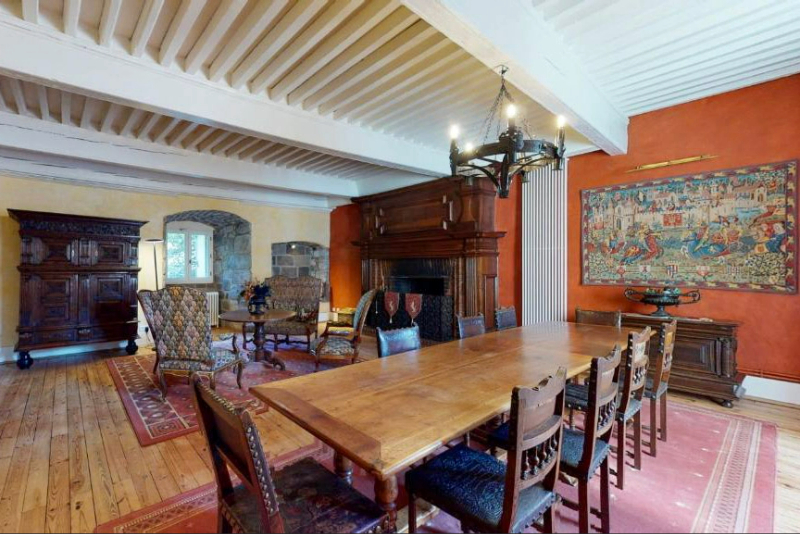
Furnished in a traditional style, with a French-style ceiling and a monumental 19th-century fireplace.
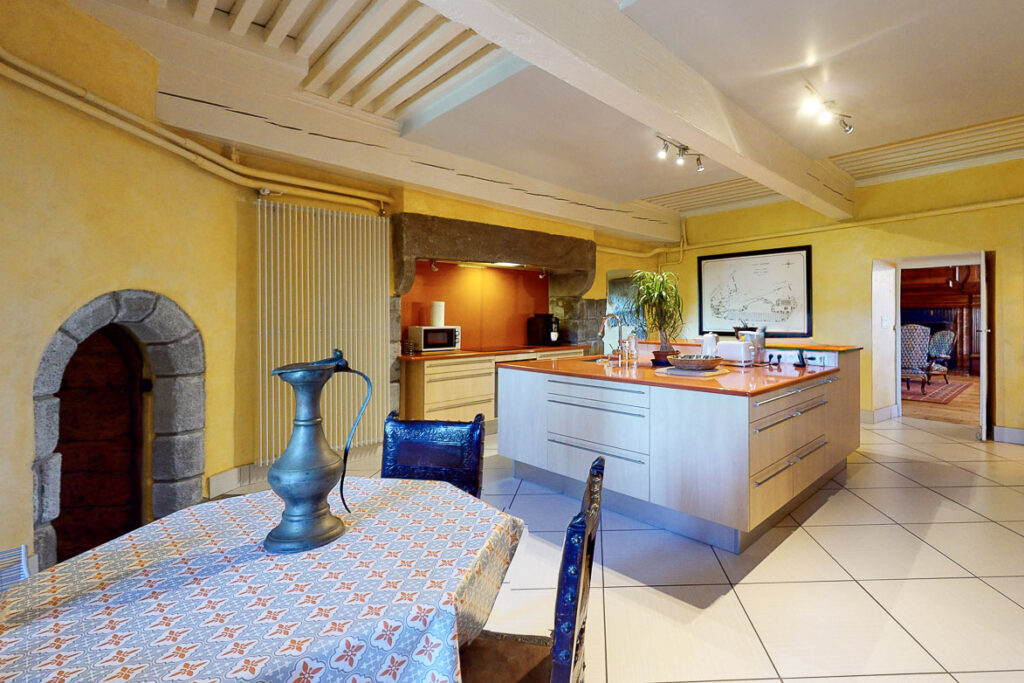
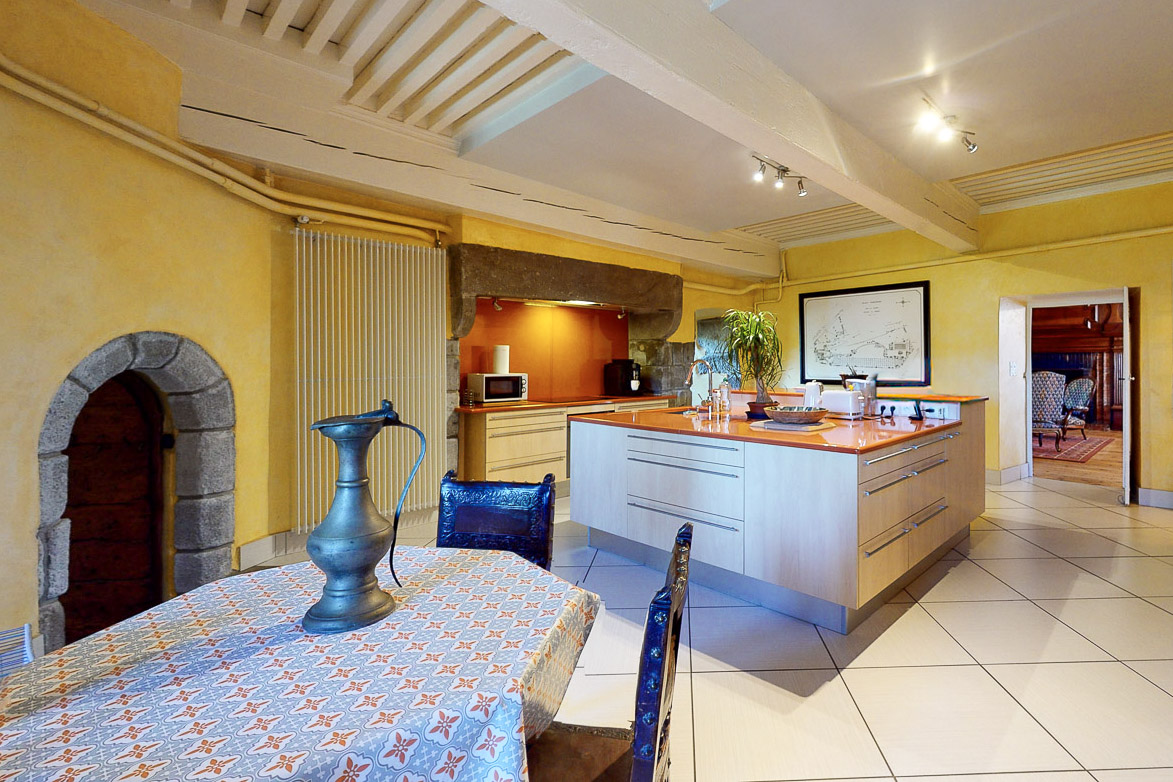
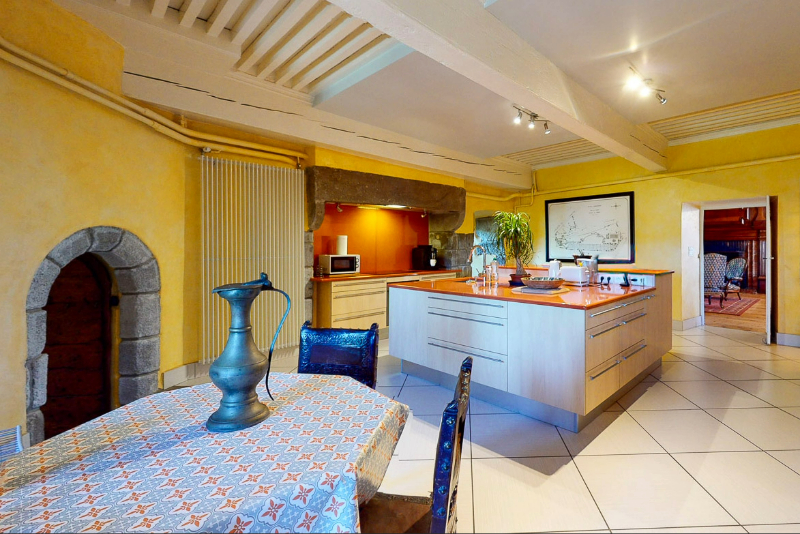
The Kitchen
Completely modern: central island, induction cooktop, full-size refrigerator.
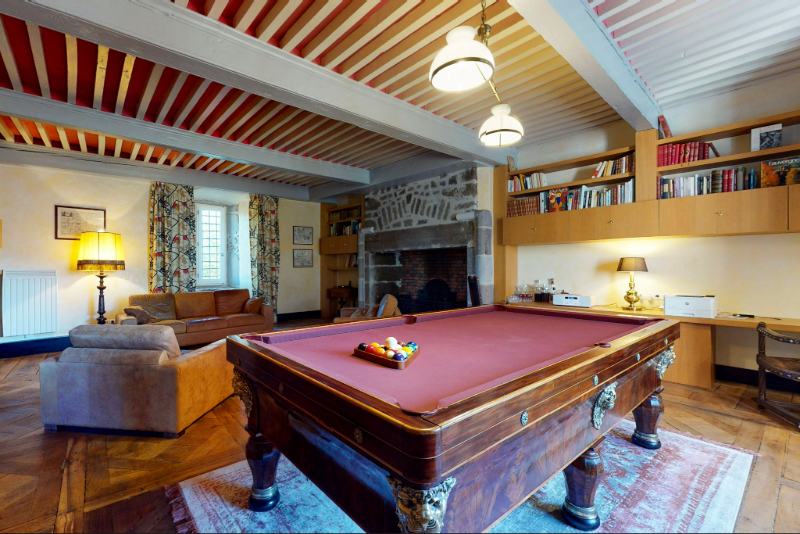
The Living Room and Library
On the first floor, perfect for reading or evenings among adults.
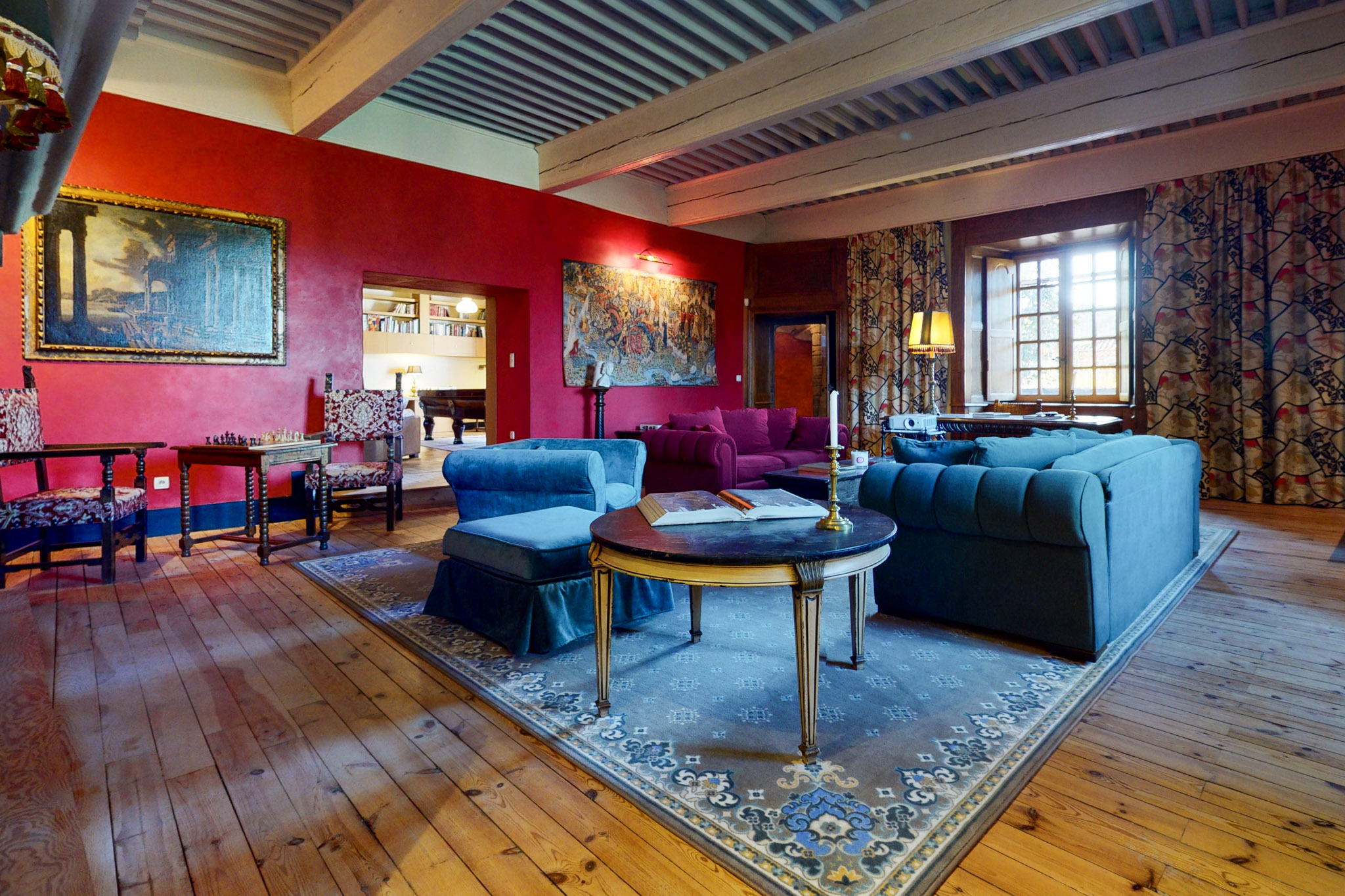
The Large Living Room
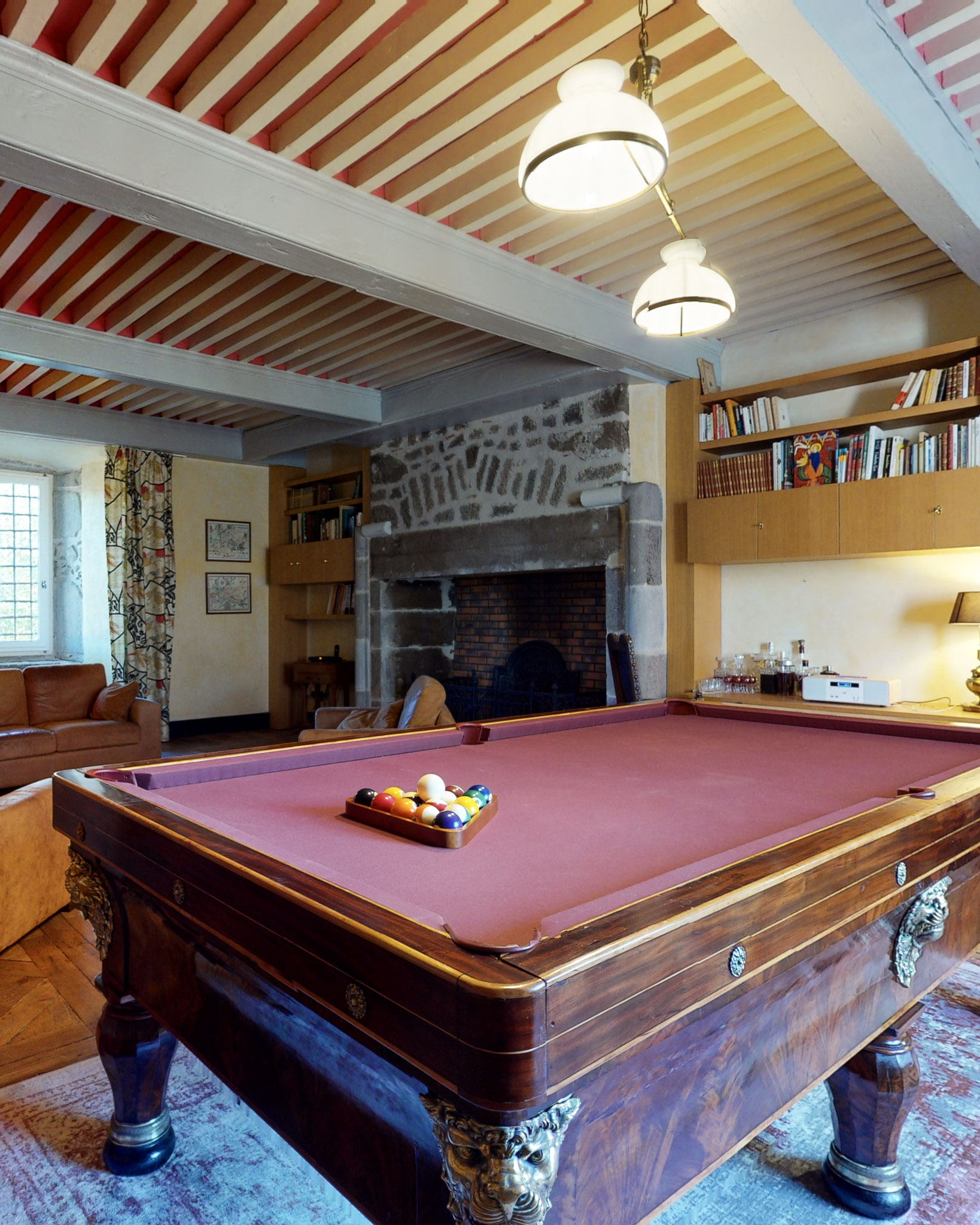
On the first floor: pool table, foosball table, games, and a 4K video projector.
The Rooms
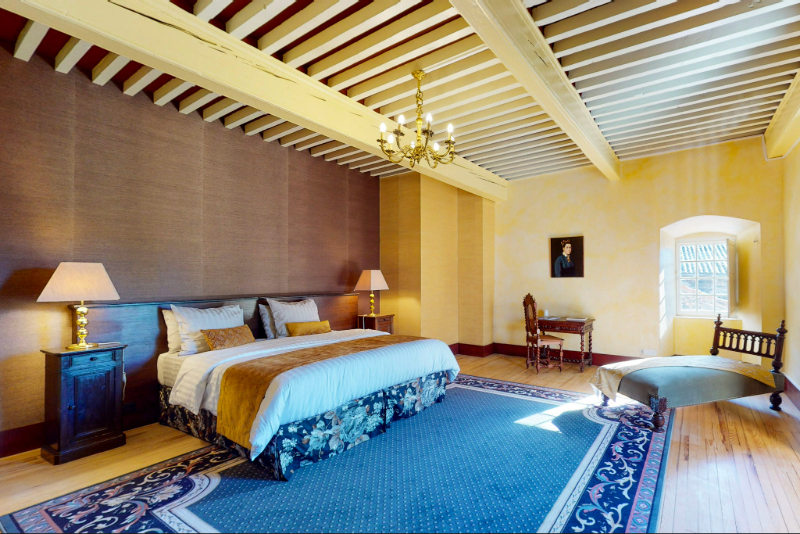
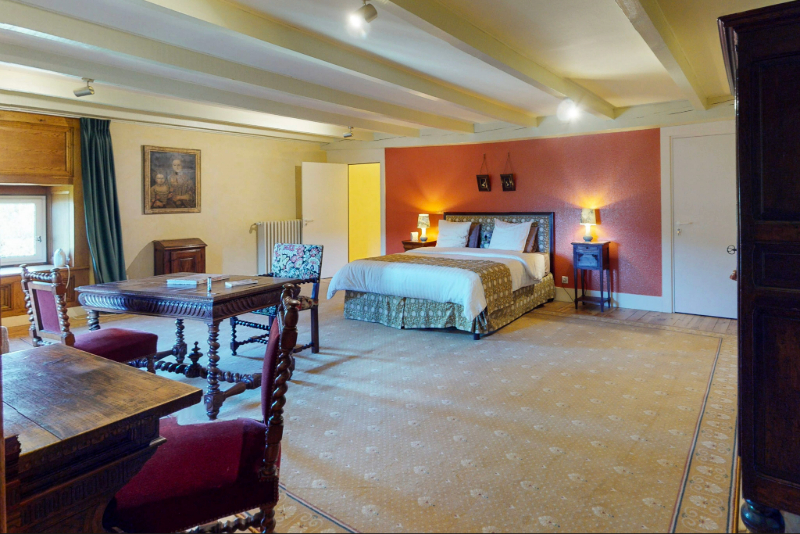
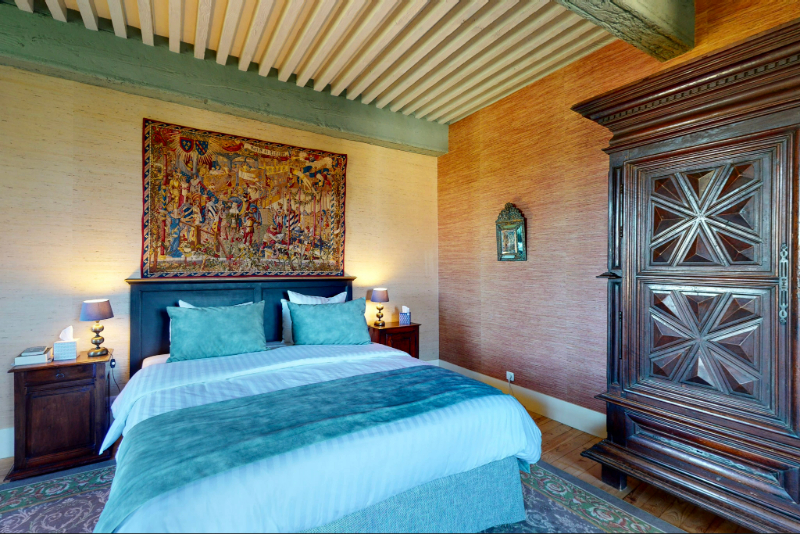
The Château de l’Allier welcomes 13 people accommodated in 5 rooms, spread over three floors. Most are 50-square-meter suites with a walk-in closet and private bathroom, featuring spacious rooms, high-quality bedding, and views of the Haut-Allier Valley.
A sofa bed in the large living room on the first floor provides an additional sleeping space measuring 180 × 200 cm, with a sink and a separate restroom nearby.
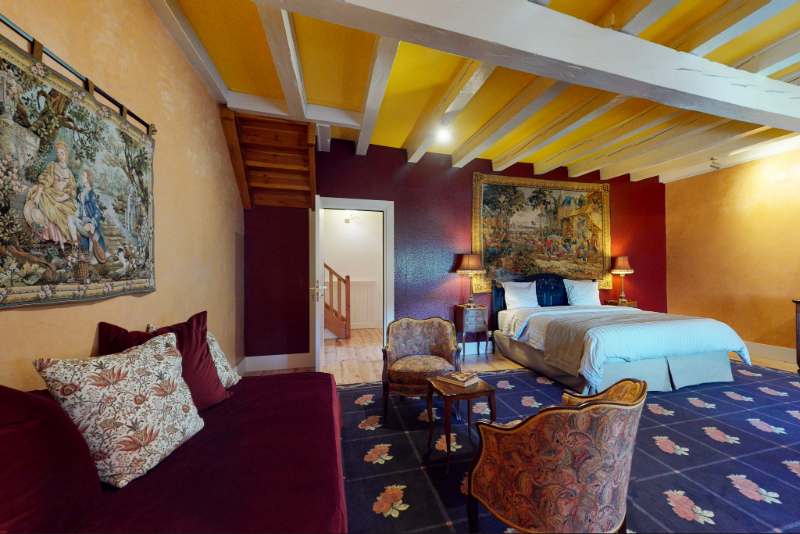
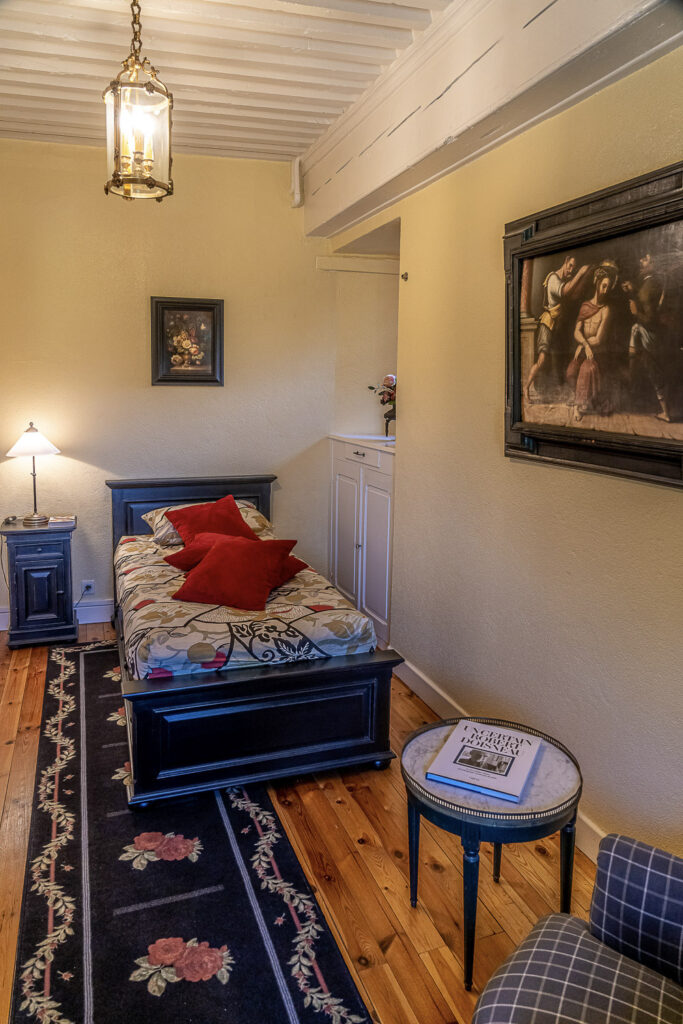
Adrien's Room
1 single bed (90 cm)
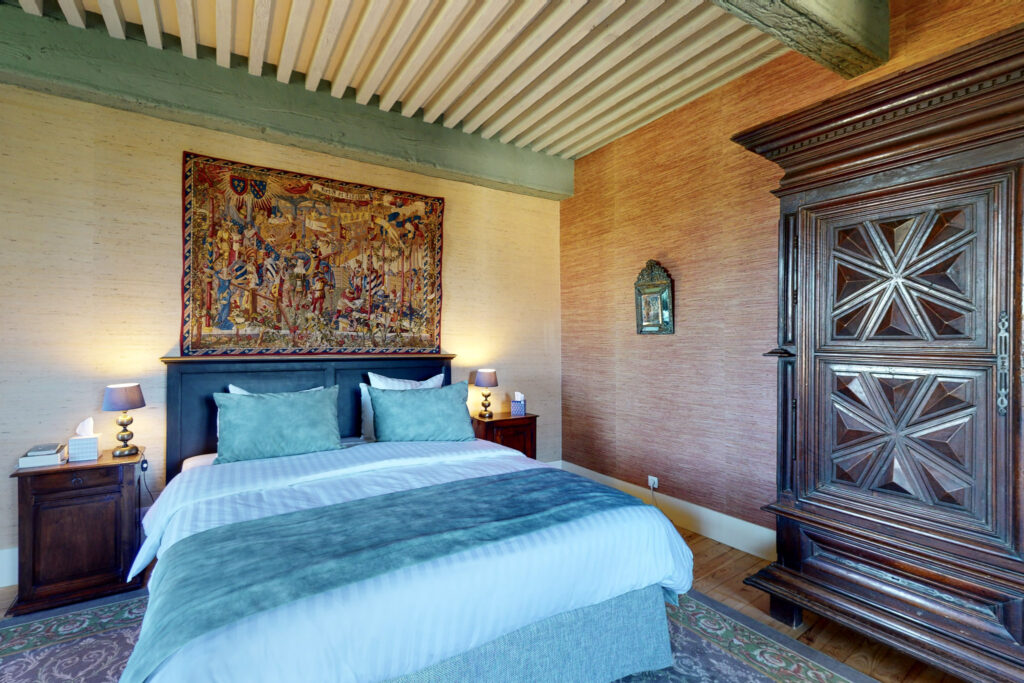
Tower of Silver Room
1 double bed (180 cm)
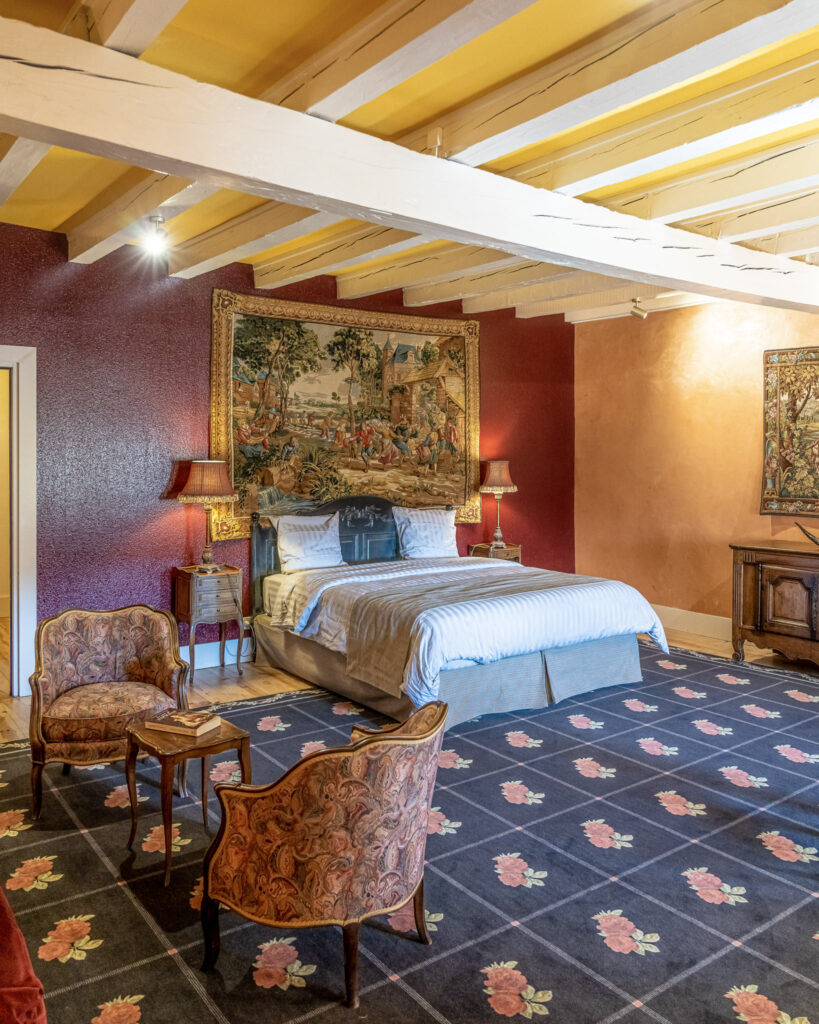
The Seneschal's Chamber
1 double bed (180 cm)
Dungeon Room
2 single beds (90 cm) + 1 rollaway bed
Lice Room
2 single beds (90 cm) + 1 rollaway bed
Living room sleeper (modular)
Sleeper Sofa (180 cm)
Availability
Check with us to see what's available, and let's discuss your project together.
Request these datesOur Rates
A fully privatized property
The Château de l’Allier is always rented out in its entirety to a single family or group, ensuring privacy, tranquility, and complete freedom.
During your stay, you’ll have access to the entire estate: the château with its reception rooms and guest rooms, and the Cellier, which can accommodate up to 13 people, as well as the grounds and the secure swimming pool.
What’s Included in Your Rental
All operating costs are included: heating, water, electricity, yard and home maintenance, as well as initial and final cleaning. Sheets and towels are provided, and the beds are made upon your arrival to ensure your comfort from the moment you arrive.
The History of the Castle
15th centuryA significant 15th-century fortified house, which has been transformed over the centuries and, in the 19th century, adorned with rich wood paneling, the Château de l’Allier was built by the de Blau family, known as early as 1160 for their estates in the Brioude region. It was in 1409 that Guillaume de Blau, lord of Gibertès, Auvers, and Cronce, acquired the lordship of Le Chambon and abandoned his former castle at La Roche-Blau in favor of this site, which enjoyed a milder climate.
The Blau family line ended in the 17th century with Françoise de Gibertès. The castle was then sold to a bourgeois from Langeac, Jean Véal, whose descendants retained it until the Revolution. Jean Balthazar Véal de Blau, an officer in Condé’s army who opposed the new regime, was forced to go into exile; his property was placed under sequestration. Upon his return to France during the Restoration, he became mayor of Langeac and, having died without issue, bequeathed his property to Messrs. de Lastic and de Chazelles.
The castle subsequently changed hands several times. During the first half of the 19th century, likely following a collapse, a rubble-stone terrace was built to serve as a buttress at the southwest corner. At the end of the same century, major renovations were undertaken: a neo-Gothic-style opening was cut into the north facade to create direct access to the park, connected by a drawbridge; the living room and dining room were fitted with large fireplaces; a small garage was added to the south facade.
From 1930, the castle was sold to Mr. Ripert d’Alauzier and fell into disrepair. Subsequent owners undertook major renovations but were unable to complete them. It was not until 1946 that the current owners undertook to expand and landscape the grounds and to complete the restoration of the castle.
The Castle’s Architecture It follows a simple, rectangular layout, featuring a large corner tower on the northwest side and a stair turret in the center of the south facade. Only the main facade, on the south side, is built of dressed stone; the others, constructed of rubble stone, have lost their original plaster. The roof is supported around its entire perimeter by a regular row of three-stepped corbels. The stair tower has retained its original entrance door, set within a pointed arch whose tympanum—once adorned with a coat of arms—has been chiseled away over time. On the north facade, access to the first floor is still via a wooden walkway, a former drawbridge connecting the castle to the garden.
Inside, the castle has preserved a stone spiral staircase and beautiful 16th-century wooden doors, with molded frames adorned with carved rosettes. On the ground floor, the dining room—redecorated in the 19th century—retains its French-style ceiling and its monumental wooden fireplace with fluted jambs. On the first floor, the living room features a 17th-century fireplace—more modest in scale but richly carved with winged sphinxes, foliage, and a helmeted head—topped by a trumeau incorporating a mirror and a landscape painting.
Things to Do in the Area
Nestled in the heart of the Allier Gorges, between Langeac and Lavoûte-Chilhac, the Château de l’Allier offers direct access to the river and an exceptional setting for lovers of nature, heritage, and the great outdoors.
The Blot Cliffs
Directly across from the castle, the Blot Cliffs—with their basalt columns and as a major prehistoric site—form a sanctuary of biodiversity in the Allier Gorges. An exceptional panorama can be admired from the estate.
Lavoûte-Chilhac, One of France’s Most Beautiful Villages
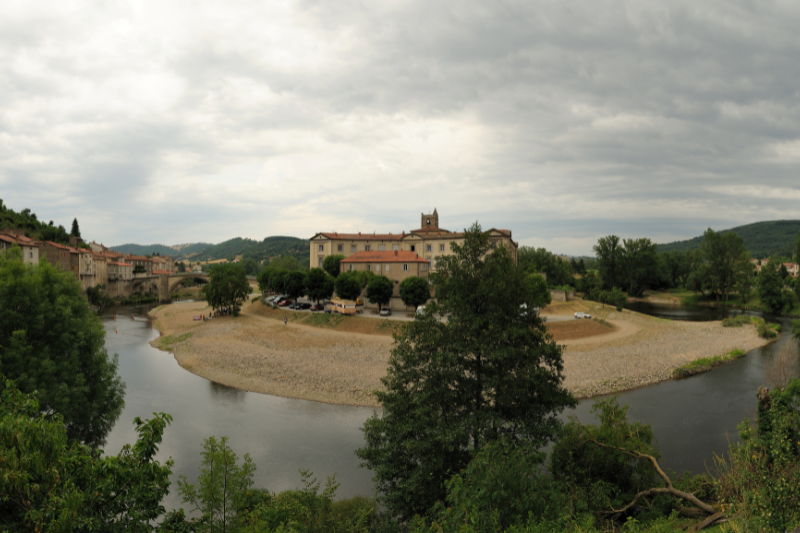
Located 8 km away, Lavoûte-Chilhac was voted the second “Favorite Village of the French” in 2023. The Priory and the Bird House round out a visit to this village, which is listed among the “Most Beautiful Villages of France.”
The Allier River and Outdoor Sports
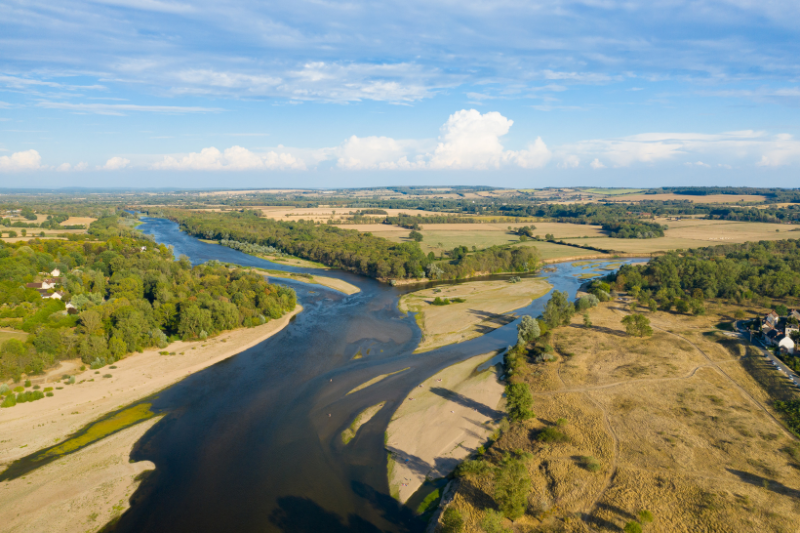
The river, accessible directly from the estate, is ideal for unsupervised swimming, fishing, canoeing, and rafting. Hiking enthusiasts will find numerous certified trails, including the GR 470 “Sources et Gorges de l’Allier,” as well as cycling (Via Allier), mountain biking, horseback riding, and rock climbing routes.
Château de Chavaniac-Lafayette
Located 10 km away, this château is the birthplace of General Marquis de La Fayette. The grounds and château are open to visitors year-round.
Brioude and Its Basilica
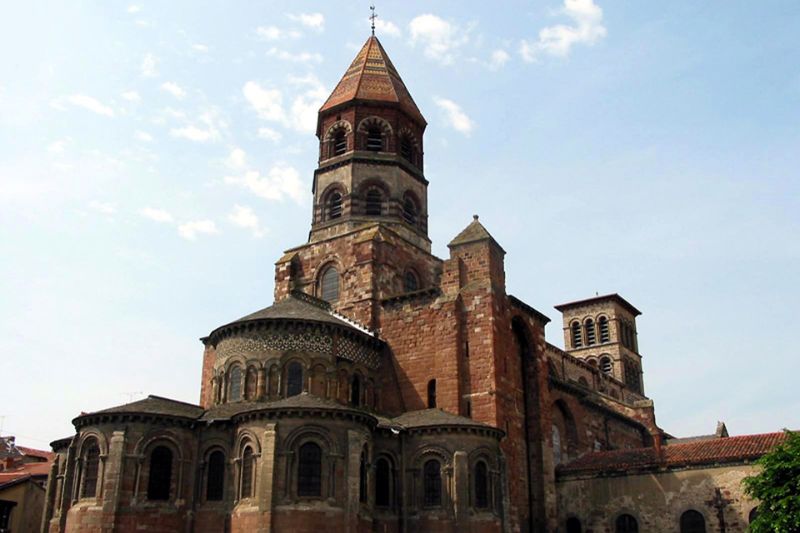
Located 22 km away, the Basilica of Saint-Julien in Brioude—built in the Auvergne Romanesque style and awarded three stars in the Michelin Green Guide—stands along the pilgrimage route leading to Santiago de Compostela. The nearby Doyenné hosts exhibitions of modern and contemporary art.
La Chaise-Dieu Abbey
Located 35 km away, this Benedictine abbey is one of the highlights of Auvergne’s religious heritage.
Location & Practical Information
The Château de l’Allier is located in Haute-Loire, Auvergne-Rhône-Alpes.
By car:
- Since Clermont-Ferrand : Take the A75 toward Montpellier, exit at Brioude / Le Puy-en-Velay, then take the N102 to Brioude. Continue on the N102 to the intersection with the D41 (Route de Chilhac), then take the D141 to Cerzat, and continue for 2.2 km to Le Chambon. 1 hour and 30 minutes (95 km).
- Since Le Puy-en-Velay : Take the D590 toward Saugues and Loudes until the intersection with the N102, then continue to Saint-Georges-d’Aurac. Turn onto the D115, then the D21 (Route du Val d’Allier) toward Saint-Georges-d’Aurac Gare, then Cerzat, and take the D141 to Le Chambon. 44 min (44.5 km).
- Since Paris : about 5 hours; see directions via Clermont-Ferrand or the A75.
By plane:
- Clermont-Ferrand Auvergne Airport : 1 hour 7 minutes (92 km).
- Lyon Saint-Exupéry Airport : 2 hours 20 minutes (191 km).
By train:
- Saint-Georges-d’Aurac Train Station : 6 min (4 km from the castle).
- Since Paris : about 5 hours and 18 minutes, via Clermont-Ferrand and then the TER.
Wi-Fi: Fiber optics
Pets: not allowed
Accommodations: provided on-site throughout your stay (daily housekeeping, breakfast available, and meals with a wine list)
Ground Floor
- Modern kitchen: central island, sink, dishwasher, electric oven, microwave, 4-burner induction cooktop, range hood, full-size refrigerator with water and ice dispenser, full set of small appliances
- Adrien’s bedroom: 1 single bed (90×200)
- Laundry room: washing machine, dryer, sink
- Separate restroom with a sink
1st floor
- Living room/library: pool table, desk, sofa, armchairs
- Large living room: sofas, armchairs, sleeper sofa (sleeps 180×200)
- Office in the tower + separate restroom with sink
- Recreation: pool, foosball, chess, board games, 4K UHD projector, retractable screen, DVD player, TV/streaming set-top box
2nd and 3rd floors
- Tour d’Argent Room (50 m²): 180×200 bed, hydromassage shower, double sink, walk-in closet
- Seneschal’s Room (50 m²): 180×200 bed, hydromassage shower, double sink, walk-in closet
- Dungeon Room (50 m²): 2 beds (90×200) + extra bed, freestanding bathtub, shower, double sink, walk-in closet
- Lice Room (50 m²): 2 beds (90×200) + extra bed, bathtub with shower screen, double sink, walk-in closet
Outdoors
- 2.7-hectare enclosed park
- Heated pool, 12 × 4 m, with automatic submersible cover; pool house (changing rooms, sink, restroom); 8 sun loungers
- Shaded ornamental pond set below ground level
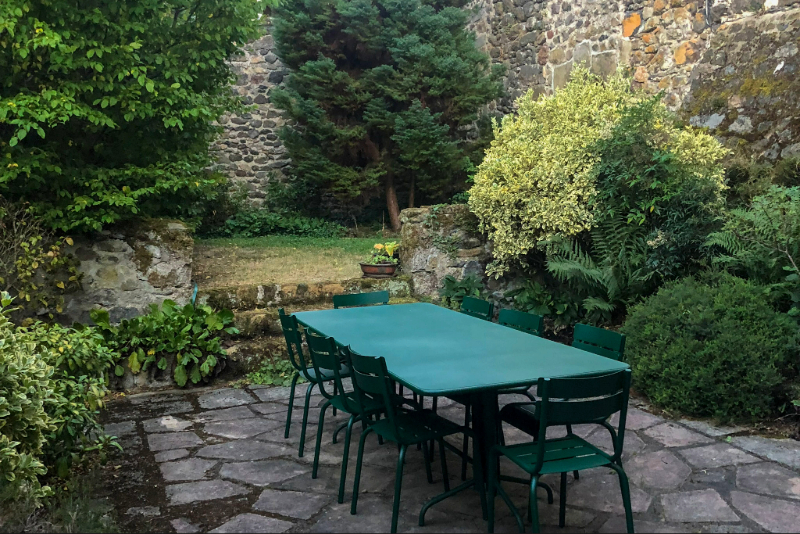
- Table tennis, bowling, pétanque, patio furniture, barbecue
Additional Accommodations
For larger groups, the Moulin de Joumard vacation rental in Aubazat (43380), just a few minutes from the castle, can accommodate 4 additional guests.
Let's talk
Ask us for a quote — our prices come straight from the owners. Our team reviews your project with the owner and replies with care.
Your enquiry
You'll work directly with our team to discuss the occasion, the number of guests, your budget, and your preferences.
Our Selection
We offer castles that are truly right for you—for every budget.
Your Reservation
Property tour, contract, secure payment: we guide you through every step of the process.
Our Support
A single point of contact from start to finish, including your service providers (caterer, transportation, etc.).